
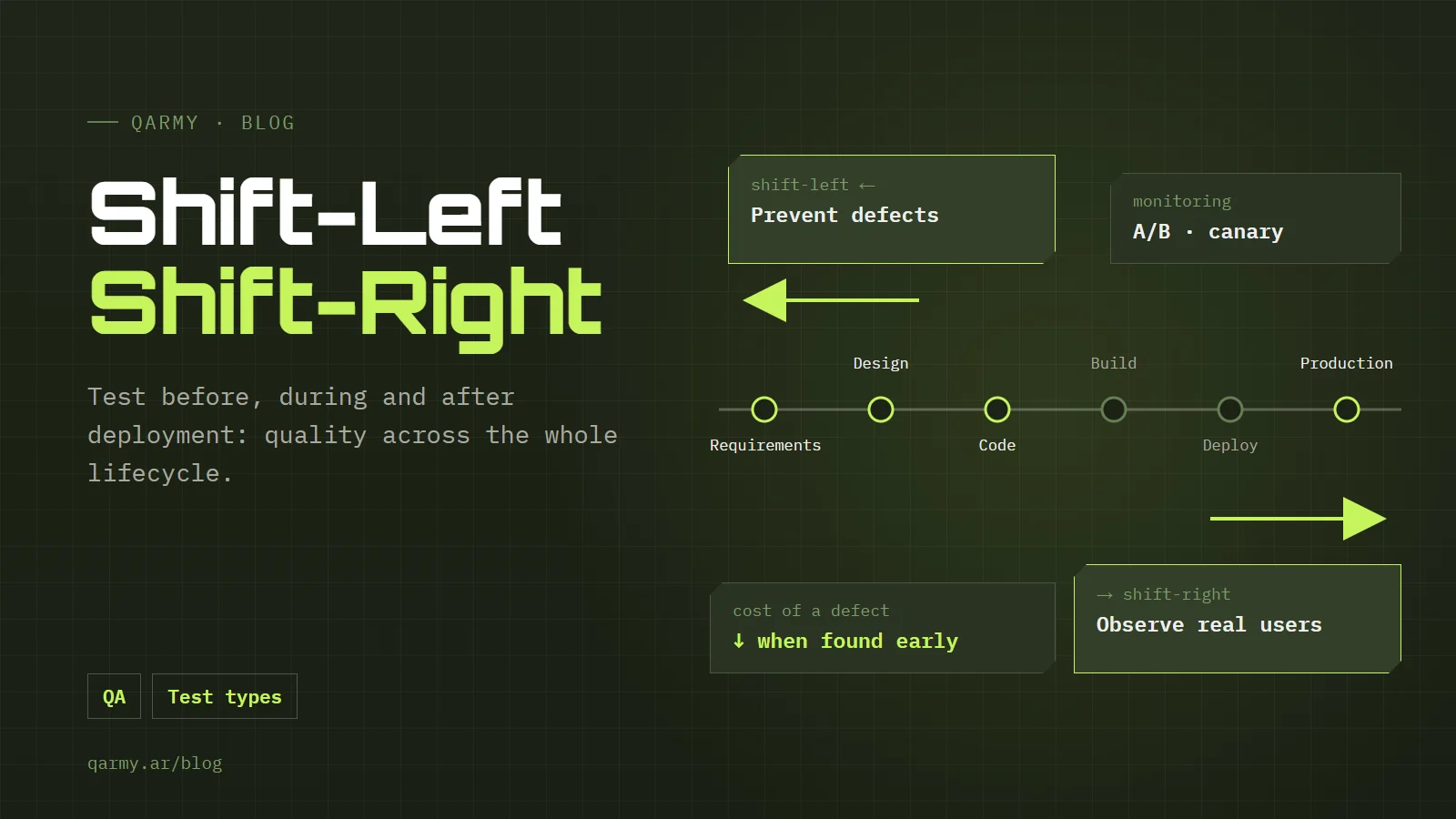
Hi everyone. Today I want to share some of my latest research on testing trends. Shift-Left and Shift-Right Testing come up more and more, but what are they and what are they for?
Software keeps evolving, and so do testing strategies. Today the trend is to integrate testing into every phase of the software lifecycle, from initial planning to monitoring the product in production. Two complementary approaches have become popular to achieve this: Shift-Left Testing and Shift-Right Testing. Let's look at what each one is and the benefits of implementing them in projects.
What is Shift-Left Testing?
Shift-Left Testing means moving test activities to the early phases of development. Instead of leaving testing for the end of the cycle (when the product is already finished), it is built in from requirements definition and design.
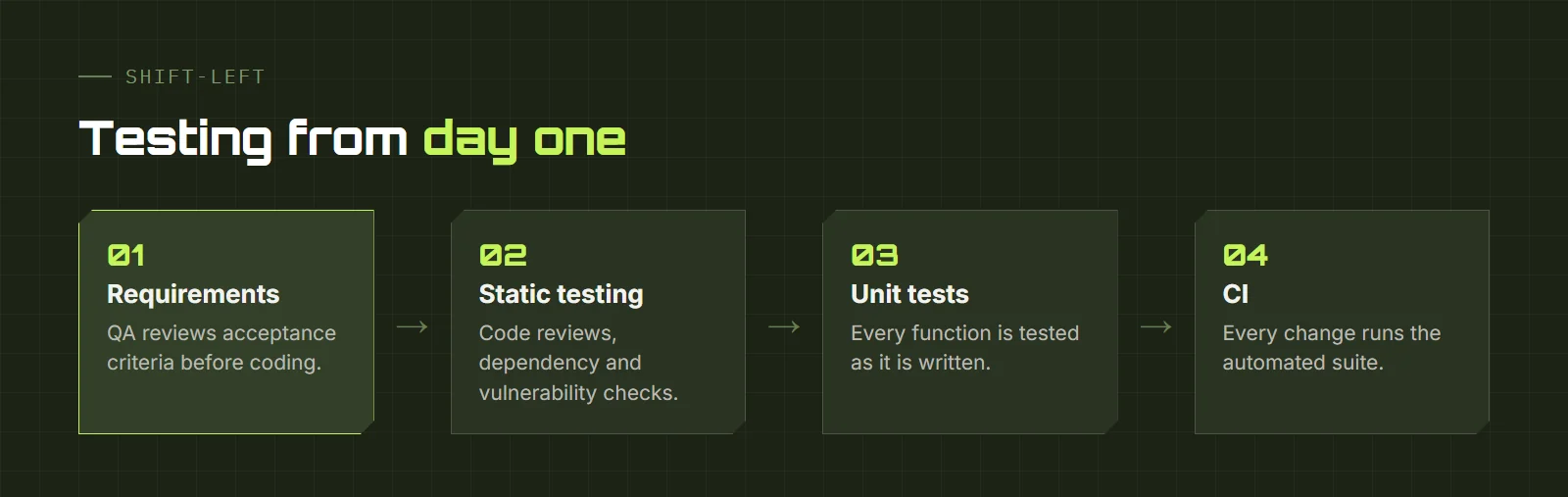
- Requirements and design testing: before developers write a single line of code, the QA team reviews the acceptance criteria of the user stories. This helps clear up doubts and ensures the software is built to meet business expectations.
- Static testing: code reviews, architecture analysis, security checks based on dependency analysis, vulnerability analysis, and so on.
- Unit tests from day one: programmers write unit tests at the same time as the code, ensuring that each function or module fulfills its responsibility in isolation.
Why Shift-Left?
- Early defect detection: the sooner a bug appears, the cheaper, faster and easier it is to fix.
- Greater test coverage: automating from the start builds a solid base of test suites that accompanies every change to the software.
- Better communication between teams: by involving QA and development from the beginning, the whole team is aligned and misunderstandings are reduced.
What is Shift-Right Testing?
By contrast, Shift-Right Testing moves responsibility for quality to environments closer to the end customer, even after launch. This includes:
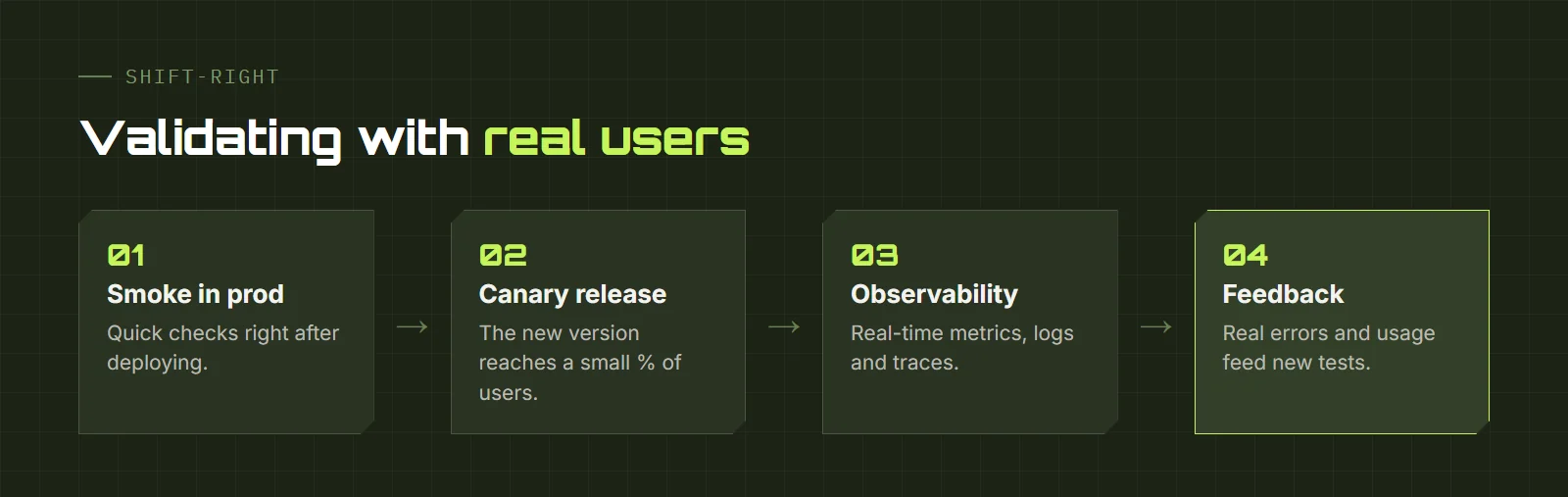
- Testing in production: controlled execution of real tests (smoke tests and canary releases) on a small percentage of users.
- Monitoring and observability: real-time metrics, structured logs and distributed traces that make it possible to detect failures or anomalous behavior in production.
- Continuous feedback: collecting real usage and error data to drive immediate improvements and plan new tests.
Why Shift-Right?
- Detecting problems in real scenarios: some failures only happen in production, with real traffic or on a specific device we may not have available to test beforehand.
- Closing the quality loop: combining early and late testing creates a continuous validation flow and reduces the “surprise effect” after a release.
- Post-launch learning: the data collected from the user experience guides the prioritization of improvements and of the bugs detected.
Benefits of using both strategies
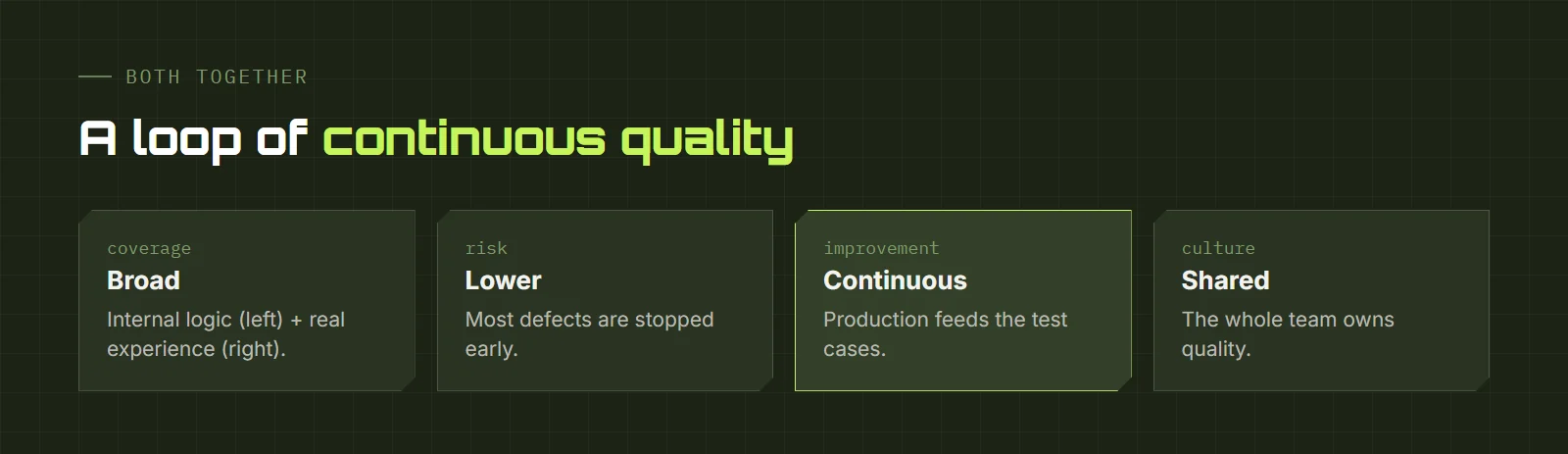
- Extensive coverage: while Shift-Left covers components and internal logic, Shift-Right deals with external behavior and the user experience in real environments.
- Risk reduction: by detecting most defects early and, at the same time, validating in production, serious failures are minimized.
- Continuous improvement: constant feedback from production feeds the automated tests, refining test cases and validation scenarios.
- Quality culture: involving the whole team promotes a shared commitment to the quality of the final product.
In conclusion, both strategies are complementary: the first ensures quality from the start of the project, while the second validates it under real conditions and learns from them. Implementing both helps reduce costs and improve product reliability.
Although implementation may require extra costs, such as setting up a pipeline infrastructure that includes testing in different environments or canary releases, the medium- and long-term benefits are very good.